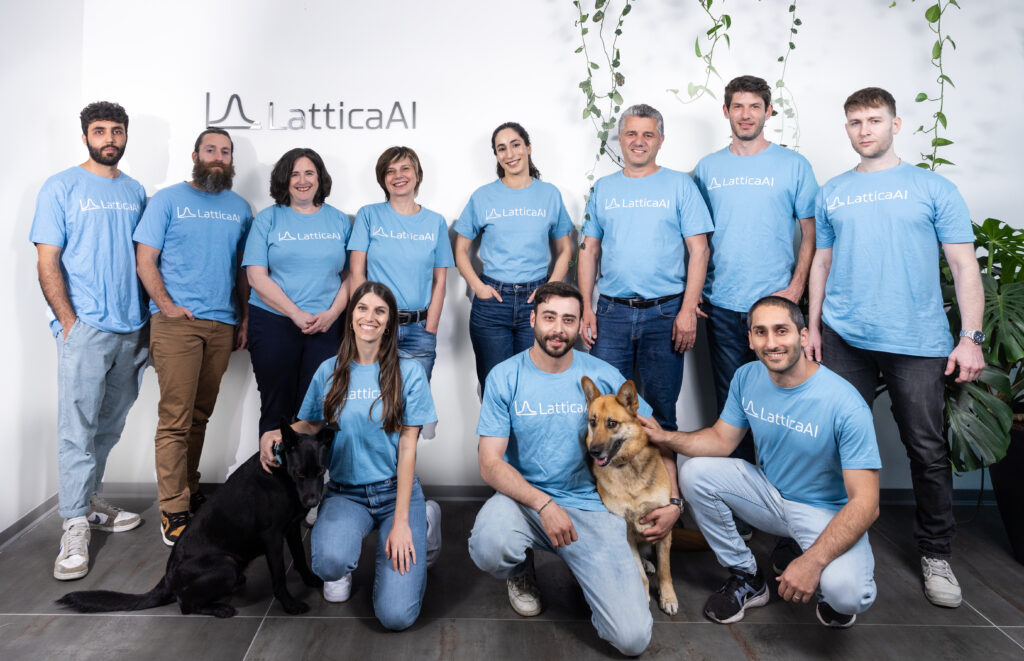
Tel Aviv, 23 April 2025. Lattica is publicly stepping out of stealth with $3.25M in pre-seed funding to bring Fully Homomorphic Encryption into production AI workloads.
The round was led by Konstantin Lomashuk’s Cyber Fund, with participation from Sandeep Nailwal, co-founder of Polygon Network and Sentient: The Open AGI Foundation, alongside additional angel investors.
The problem we’re solving
AI is moving into healthcare, finance, and government faster than the privacy story can keep up. In Cisco’s 2025 AI Briefing, 70% of CEOs said they were worried about the state of their networks given AI adoption, and 34% named security as a primary barrier. The pattern is the same everywhere: the model is ready, the data is ready, but no one wants to be the party that hands plaintext to the other side.
Fully Homomorphic Encryption has been called the holy grail of cryptography for a decade because it removes that handoff entirely. Computation happens directly on encrypted data, and nothing is ever decrypted in the cloud. The mathematics has been ready for years. The performance has not.
What Lattica is building
A cloud-based platform that lets developers query AI models with encrypted inputs and get encrypted outputs back, without the model provider ever seeing user data in the clear. The whole inference path stays encrypted from end to end.
Encrypted end to end
User queries stay encrypted throughout the entire inference, never decrypted on the server side.
Tailored to neural nets
Built around the mathematical overlap between FHE and ML, so encrypted inference looks like ordinary inference to product teams.
Hardware-agnostic
Runs across CPUs, GPUs, TPUs, and dedicated accelerators like FPGAs and ASICs through a single integration layer.
HEAL: the layer that makes it portable
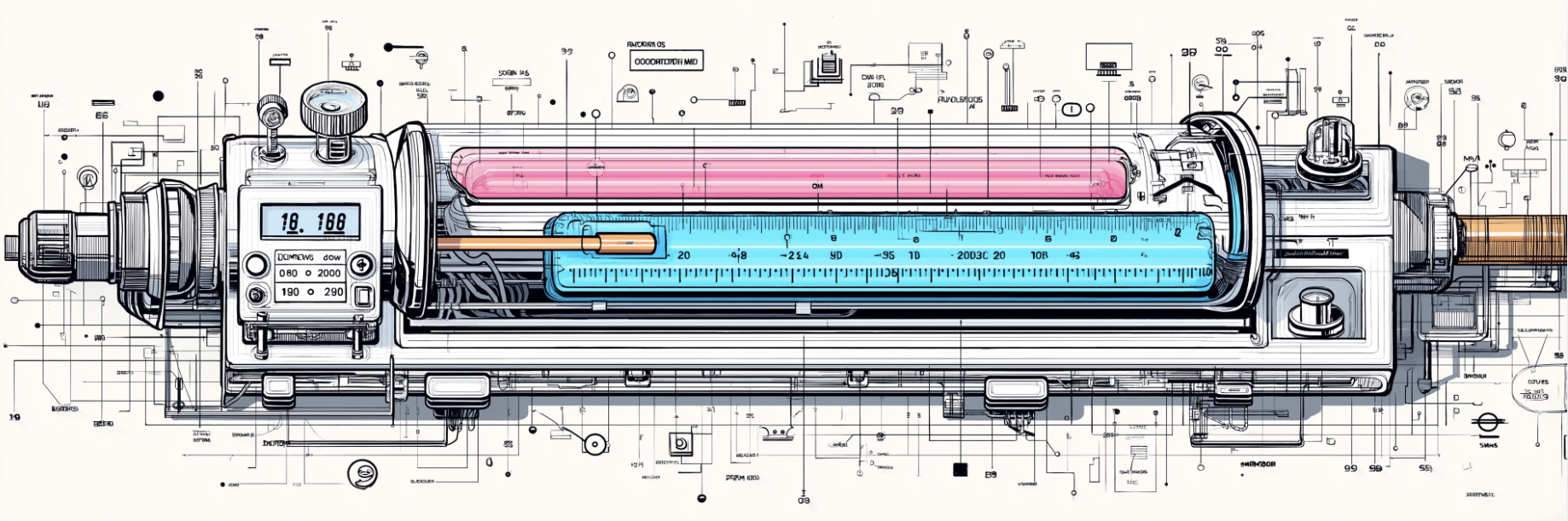
At the core of the platform sits HEAL, our Homomorphic Encryption Abstraction Layer. HEAL is the contract between FHE workloads and the silicon underneath, so a model written once can run across very different backends without being rewritten for each.
-
One interface, many backends GPUs, TPUs, CPUs, FPGAs, and custom ASICs all plug into the same surface.
-
Standardised acceleration Hardware teams optimise the operations they care about; the rest of the stack benefits automatically.
-
Built for the cloud HEAL is delivered as a service, so teams adopt encrypted inference without owning the cryptographic stack themselves.
What the community is telling us
Alongside the launch, we’re publishing results from an in-depth survey of the FHE community. The headline finding mirrors how we’ve built the company: 71% of respondents believe practical FHE adoption will come from a combination of hardware and software, not from either alone. Read more in our FHE community survey.
“By combining hardware acceleration with software-based optimisation, we realised we could push FHE to commercial viability and use it to solve the data dilemmas holding back AI in sensitive industries. We’re enabling practical FHE with a solution tailor-made for neural networks.”
— Dr. Rotem Tsabary, Founder and CEO
“Lattica is pushing the boundaries of Fully Homomorphic Encryption and solving one of the most critical challenges in AI security. This is the kind of deep-tech innovation that defines the future.”
— Konstantin Lomashuk, Managing Partner, Cyber Fund
“Lattica’s product-first approach fundamentally transforms sensitive data processing in the AI ecosystem. They’ve made FHE both practical and scalable.”
— Sandeep Nailwal, Co-founder, Polygon Network
Where we’re heading
Healthcare and finance are the first focus areas: encrypted diagnostics, encrypted analytics, encrypted financial workflows. The longer arc is broader. Every AI product that touches sensitive data is a candidate for encrypted inference, and we’re building the platform to make that the default rather than the exception.